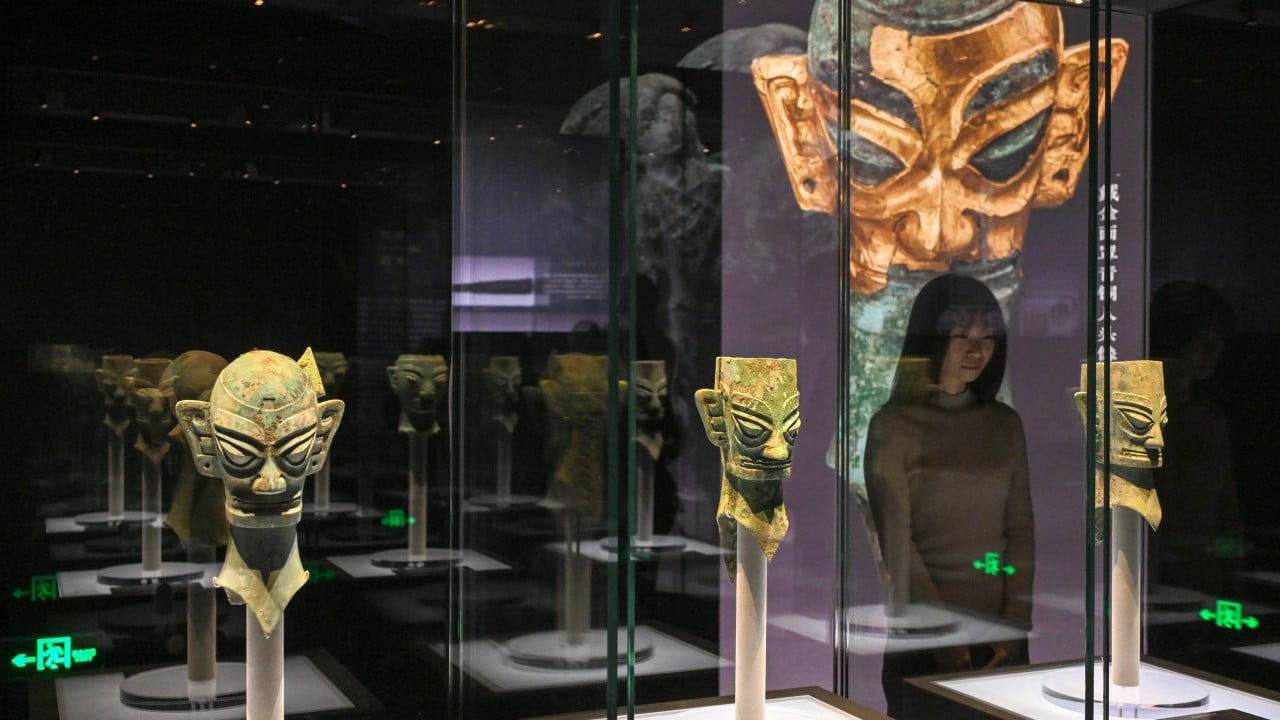
In the highest-ranking sacrificial pit at Sanxingdui, 11 crimson beads lay undisturbed for 3,000 years among bronze vessels, ivory tusks and fragments of gold.
They are carnelian – a red gemstone prized across the ancient world, from the Indus Valley to the Middle East and the Mediterranean.
In China, however, carnelian was not commonly found in elite burials until the late Western Zhou dynasty (c1046-771 BC), with red tones traditionally represented by other minerals, such as ochre and…